Stoaa for therapists

Better care, less hassle

See between the sessions with the Stoaa app for patients. A practice workspace for the work that happens between sessions, built to the European bar rather than ported from the American one.

Closed pilot · Latvia first · eID sign-in at launch

Interactive demo

Click through the workspace.

Pick a screen and its description follows. On a desktop, every item in the side rail opens too.

Dashboard

Your week on a five-day canvas, and beside it the lane of what needs you — messages, the legal clock, acute-state use, plan changes, homework back. Grouped by duty, never ranked.

For you: You open the day knowing who needs a reply and what is on a clock.

Dashboard: a five-day week canvas with the booked sessions, a column headed what needs you with lanes for messages, legal, acute state, plan and adjust and homework, and this week's counts.

What it is

What is Stoaa for therapists

Patient card, session mode, care plans, crisis plans, instruments, referrals and billing — one workspace, and the free Stoaa app in your patient's pocket on the other side of it.

  • The whole process, one place

    Not just the forty minutes in the room. The plan, the homework, the check-ins, the notes and the invoice stop living in four different systems.

  • Only what they chose to share

    Your patients use the free Stoaa app. What crosses to you is sealed on their device first, and only ever the parts they picked.

  • Built to the European bar

    Register-verified onboarding, a consent ledger, an append-only audit log, EU storage and FHIR R4 export. Not a US product with a data addendum bolted on.

  • Safe by construction

    Notes you cannot quietly edit, a hand-over PIN before the tablet reaches a patient, and consent gates that refuse the action rather than warn about it.

The other side

The Stoaa app, on the other side

Free for your patients, and staying free.

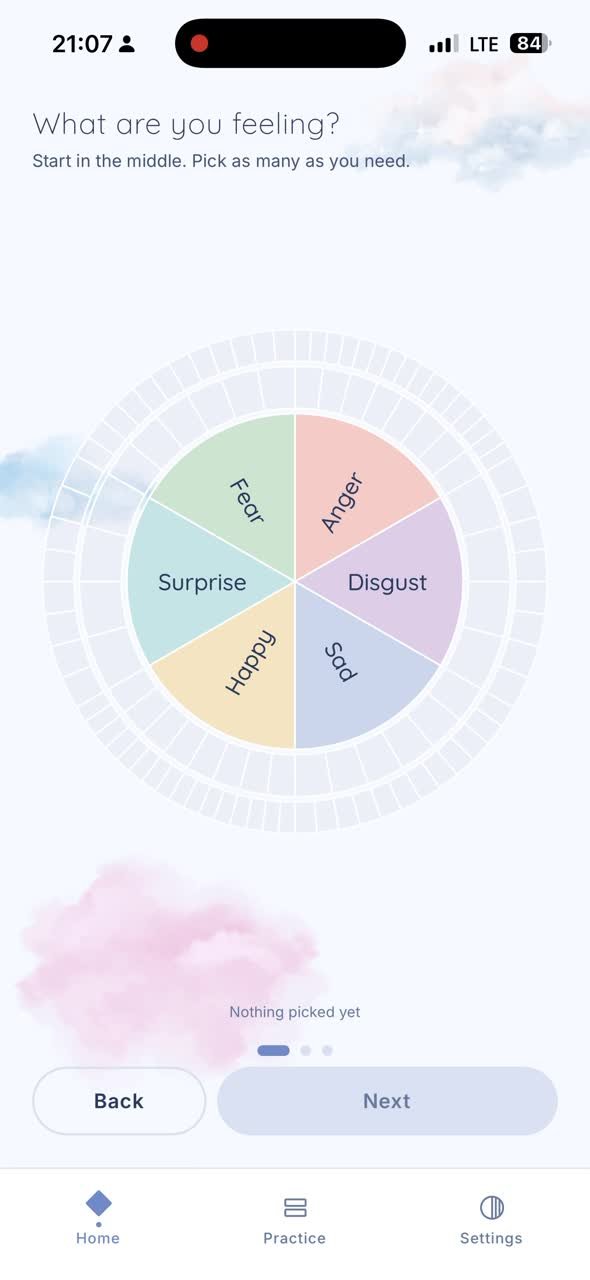
Your patients get four modes — Breathe, Bilateral, Ground and Tap — an emotion-wheel check-in that runs three layers deep, and a help card that is always one tap and never gated. Techniques are withheld as well as offered: body scan is hidden during dissociation and panic, thought work mid-panic.

What crosses to you is sealed on their device first, and only ever the parts they picked: a check-in, a homework return, a note that a tool helped or made things worse. Their journal, their thought logs and their crisis contacts never leave the phone. We cannot read any of it, and neither can you unless they hand it over.

  • Patients without the app get a one-use coded link instead
  • That link holds no account and remembers nothing afterwards
  • Nothing is scored on the patient's side — the score belongs in the room
  • FHIR R4 export for the records that have to leave

Patient-side connection to a therapist arrives with the pilot cohort. It is switched off in the app build on the stores today.

The emotion wheel in the patient app: three rings of feelings around six core emotions, with as many as the person needs selectable.
Their check-in, in their words. You see it only if they send it.

Safety

The failure modes we designed against.

Every one of these is a real incident class, not a feature bullet.

Handing over the tablet

A six-digit PIN locks the practice down before the device reaches a patient's hands, and the shell's global shortcuts stop firing underneath it. Without that, one keystroke from the search overlay reaches every other patient's notes.

Notes you cannot quietly edit

Clinical notes are sealed and the audit log is append-only. What was written at the time stays what was written at the time.

Export as a deliberate act

Moving a record out asks for a fresh confirmation at the moment you do it, because that is when the decision is actually being made.

Verification

Verified against the register. Without storing your legal name.

Practice verification matches your eID against the professional register. The psychologists' register is machine-readable and checks automatically; the physicians' register is CAPTCHA-gated and goes to a two-person manual review.

What survives the check is your register number and the display name you chose. The legal name the check returns is deliberately never stored.

See it in Settings

Keys and recovery

  • Notes sealed with a key held on your device
  • A recovery kit shown once, at verification, and never again
  • A successor custodian, required for solo practice
  • If every device and the recovery kit are gone, records are unrecoverable by design — we cannot read them, so we cannot restore them

Why

Why we created Stoaa for therapists

Lead the whole process, not just forty minutes a month. Human connection improves outcomes. The missing piece is a safe place to do the rest of it.

  • Structure is what holds a boundary up

    Boundaries matter, and structure and guardrails are what keep them standing. A structured check-in replaces chatting at eleven at night.

  • Booking a slot is not a system

    An online system has to be more than a calendar: payment, secure sessions, instruments, and note-taking that does not sit between you and the person.

  • Feedback you can actually act on

    “Breathing makes my anxiety worse.” “Rhythm exercises get me out of a spiral.” That is exactly what the patient app lets a person tell you, in their words, and only if they choose to.

  • The work between sessions is invisible

    The printed exercise list is gone three days after the appointment, and nothing records what happened in between, so the next session starts from zero.

The landscape

What else is on offer

The tools you have been offered were built somewhere else.

How existing tools compare with Stoaa for EU therapists
What you are offeredWhat it actually doesWhere it stops
SimplePractice, TheraNestUS practice management: notes, billing, scheduling.US only. No FHIR export into EU systems, and no consumer surface at all.
Quenza, CarepatronSelf-serve homework and practice tools, growing fast.Exercise libraries rather than regulation. No register-verified onboarding, no EU state-system path.
BetterHelp, TalkspaceSubscription matchmaking and therapy delivery.A directory, not a tool. No between-session layer, no therapist workflow.
Excel, WhatsApp, paperWhat most EU practices actually run on today.No audit trail, no consent ledger, and special-category health data in a consumer messenger.

Pricing

Planned pricing, per seat, per month.

The patient app is free and stays free. The practice side is what pays for the work. Pilot participants are not billed during the pilot.

Verified

€9

Fewer features. Never less vetting.

Single specialist

€29

Unlimited patients, audit log, crisis-plan builder.

Up to five seats

€89

A small practice, sharing a roster.

Multi-site

€299

Several locations under one practice.

Enterprise

€799

Clinics and institutional deployments.

Billed directly, not through an app store. Prices are the planned launch ladder and are not a contract until the pilot ends.

The pilot

The first cohort is in Latvia.

A small closed pilot with practising therapists, starting at home. There are 2,150 registered specialists in Latvia and we are looking for a handful of them to break this properly before anyone else sees it.

  • No billing during the pilot
  • Local device only, with eID sign-in arriving at launch
  • Your feedback changes the build, not a roadmap slide
  • If you are outside Latvia, say so — the queue is real

Ask for a seat